
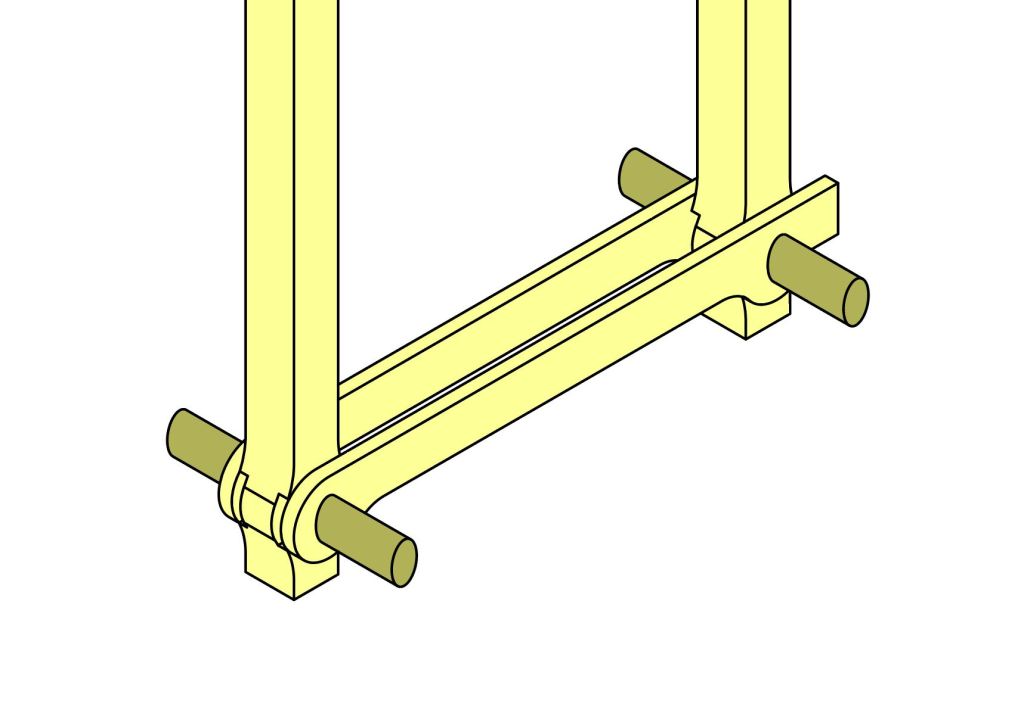
This week, I looked to extend my research. To do this, I delved specifically into the direction of earthquake resistance, and pagoda strength characteristics. All of this is to answer the question I need to know before proceeding, how have pagodas resisted earthquakes and storms for hundreds of years? What value can this hold for modern purposes? I extended my annotated bibliography with the following entries:
Löffler, Beate. “Thwarted Innovation: The Western Discourse on Earthquake Resistance in Japanese Architecture – a Historical Review.” Construction History, vol. 34, no. 2, The Construction History Society, 2019, pp. 35–52, https://www.jstor.org/stable/27041600.
This article looks at the relatively low level of Western scholarship focused on traditional Japanese construction, and its earthquake resistance. Through this specific lens, the paper probes why this gap in research has occurred, and how to fill it. Via the analysis of Japanese Pagodas, I hope that this can inform ways in which their building techniques can be applied for my purposes
Hanazato, Toshikazu, et al. “Seismic and Wind Performance of Five-Storied Pagoda of Timber Heritage Structure.” Advanced Materials Research, vol. 133–134, Trans Tech Publications, Ltd., Oct. 2010, pp. 79–95. Crossref, doi:10.4028/www.scientific.net/amr.133-134.79.
This paper is particularly fascinating in that it uses numbers. Through scientific data collection over a number of years, the researchers have collected long term data to discern the strength capabilities of these several hundred year old tall timber structures. It also reviews past studies over similar seismic and wind performance of these buildings, and can as such extend to become a great source for further resource gathering.
Yijie Zhang, Hesheng Tang, Songtao Xue & Yang Xun (2015) Investigation into the Architectural Design of a Traditional Japanese Wooden Pagoda, Journal of Asian Architecture and Building Engineering, 14:2, 241-246, DOI: 10.3130/jaabe.14.241
This paper gets into the weeds about some very specific building techniques, and components of Pagodas, specifically japanese pagodas built in the Kiwarihou style. Knowing these components, and the differences in pagoda styles will be essential in determining the joinery techniques and the purposes they hold for my research.
As I looked in to this, I quickly realized how much I am going to have to learn about the very complex architecture, structure, typologies, and history of pagodas as I proceed. On one hand this is daunting, tackling such a complex and rich aspect of a foreign culture and history is a challenge. On the other, I am left with plenty of new and exciting avenues for exploration and learning.


 Myles Richter Design
Leave a reply to Jackson Harris Cancel reply