
This week begins “Module Three”. At this stage, I will be producing the actual prospectus document, which will largely encompass the format of my blog posts for the next few weeks. Before drafting up this document, I must first implement the changes after reflecting on feedback and critique.
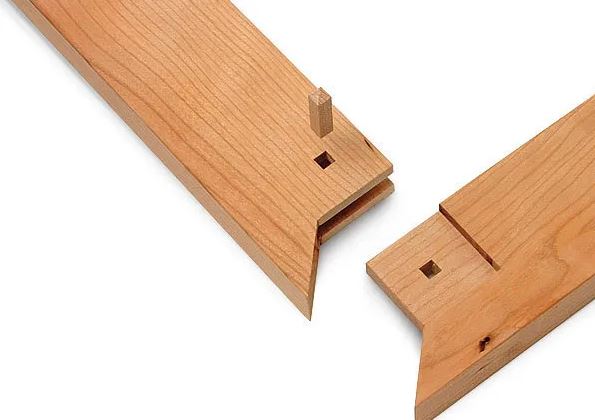
In essence, my plan for executing this research was to study the joints of Japanese Joinery. This would include a historical look at their qualities, but also a more personal, physical approach. I would make the joints using only the tools available to the historic Japanese craftsman, and in doing so, gain a much deeper appreciation and insight into their qualities and application. I would then take this knowledge of making these joints and apply it to the design of some final piece, the form of which is not yet determined, as it is informed by the process.
This all sounds nice, but a very valid concern was raised. throughout that method, I would not be doing anything new, or innovative. I would only be doing what has already been done. This is a very fair point, as my application of the joints into a final furniture piece would indeed not likely be something that wouldn’t have been done before.
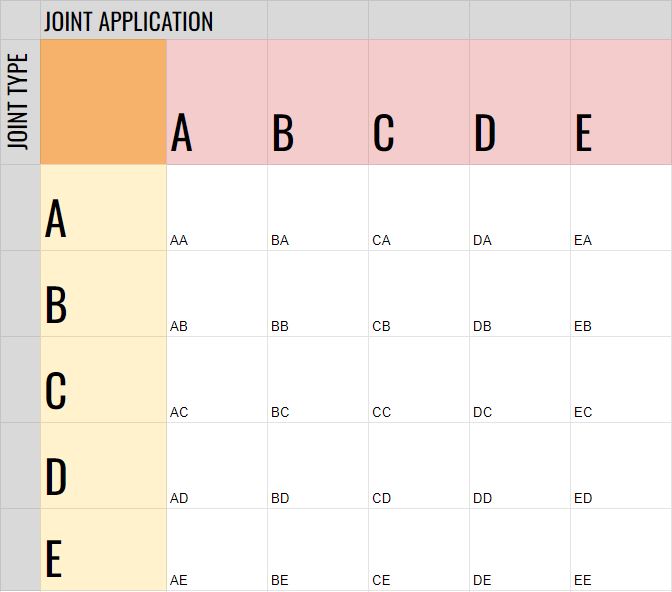
I need to take my method a step further. I need to find a way to study and apply Japanese Joinery in an atypical, innovative way. My plan to achieve this next step is to go for a parametric design approach, one in which I juxtapose joint type and joint application, in a matrix to hopefully find unexpectedly optimal combinations. I would hope this parametric study reveals a joint typology and application relationship that allows me to build an ultimate assemblage that I could not build with modern joinery methods. This study would look something like this: where the letter combos are the relationships found. The applications include those in tension, compression, torsion, bending, and twisting.
This will be proven by its ability to be deconstructed and reassembled in various forms, such as a table, to a chair, to a stool. Or a much more abstract arrangement of forms. Again, it is hard to say exactly where this final product will go as it is entirely informed by the parametric study. But I hope that this parametric approach, and more unconventional result are more suiting to a capstone research.

 Myles Richter Design
Leave a comment